Which of the following statements is FALSE with respect to the Power of Attorney (POA)?
How to get there
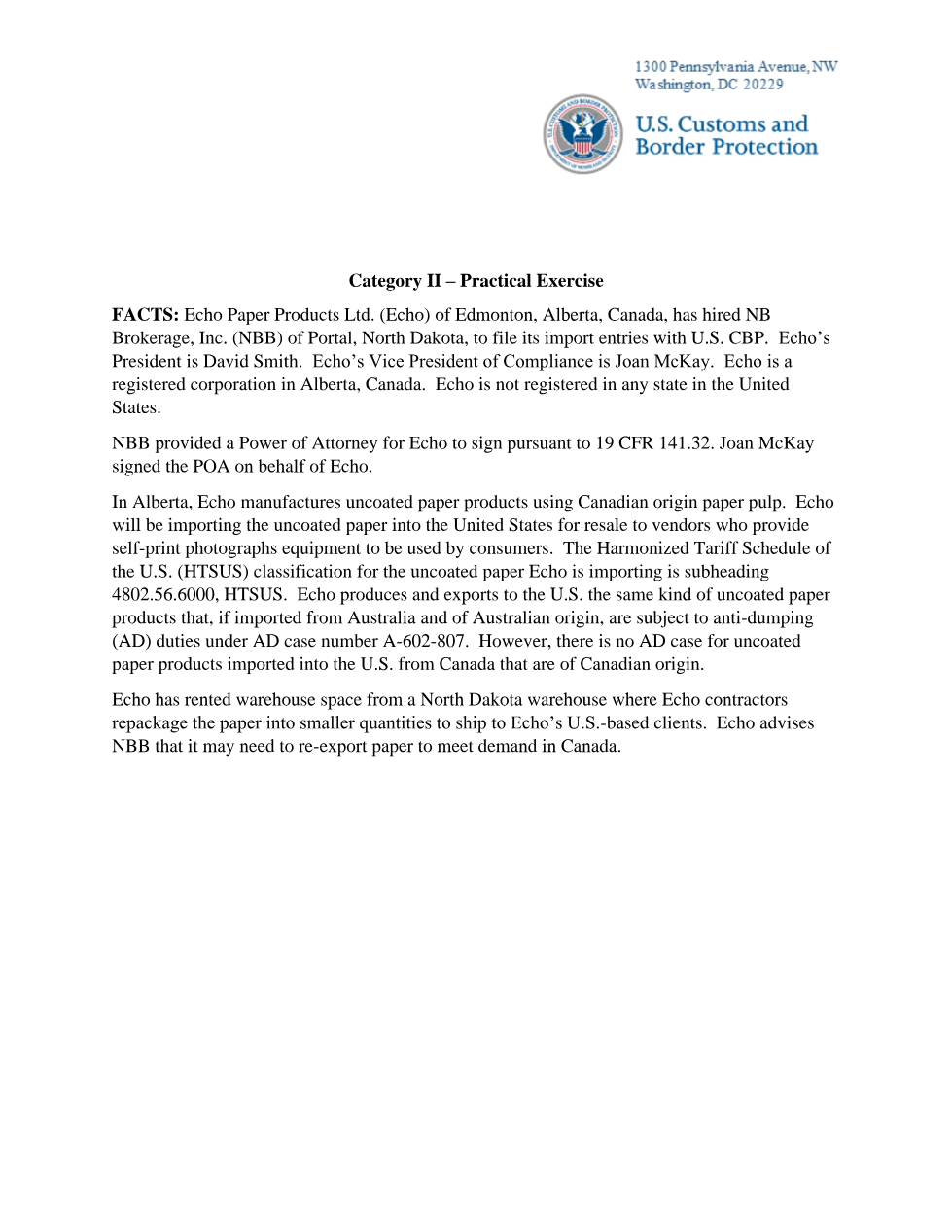
Echo is an Alberta corporation not registered in any U.S. state, so it's a nonresident principal (§ 141.31(d)). Check each statement:
19 CFR 141.36A power of attorney executed by a nonresident principal shall not be accepted unless the agent designated thereby is a resident and is authorized to accept service of process against such nonresident.
19 CFR 141.37If a nonresident corporation has not qualified to conduct business under state law …, the power of attorney shall be supported by documentation establishing the authority of the grantor designated to execute the power of attorney on behalf of the corporation.
19 CFR 111.29(b)(2)(i)The written notification [on method of payment] … must be provided … On, or attached to, any power of attorney provided by the broker to a client for execution …
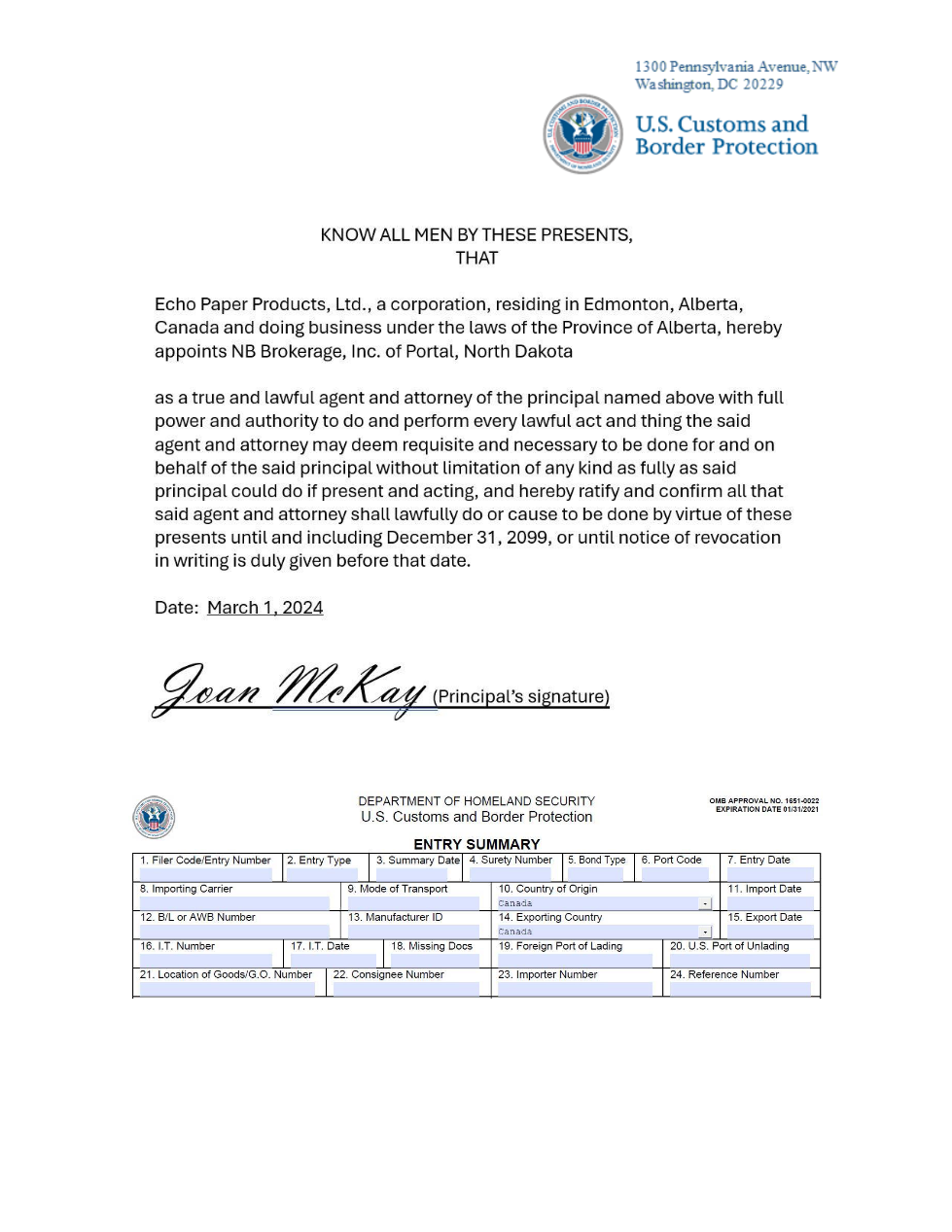
A, B and C are all true. D is false: nothing in part 141 requires a corporate seal on a customs POA. The § 113.37(g)(1)(v) seal requirement applies to a corporate surety's power of attorney for its bond agents, not to an importer's POA to a broker. The answer is D.
Why the other choices are wrong
A) Resident agent authorized to accept service: true. § 141.36 conditions acceptance on that language. (Echo's POA on p. 10 doesn't contain it, which is exactly the point.)
B) Proof of Joan McKay's authority attached: true, § 141.37. Echo isn't qualified to do business in any U.S. state.
C) Method-of-payment notice on or attached to the POA: true, § 111.29(b)(2)(i).
Tip
Nonresident corporate POA: a resident agent who accepts service of process (§ 141.36), plus proof of the signer's authority if the company isn't qualified in a state (§ 141.37). The broker attaches the § 111.29(b) payment notice. No corporate seal is needed.
Sources: 19 CFR 141.31(d), 141.36, 141.37, 111.29(b), 113.37(g) (eCFR); exhibits pp. 9–10.
CBP answer key: Answer D · 19 CFR 111.29; 19 CFR 141.36; 19 CFR 141.38Source: CBP past exams ↗