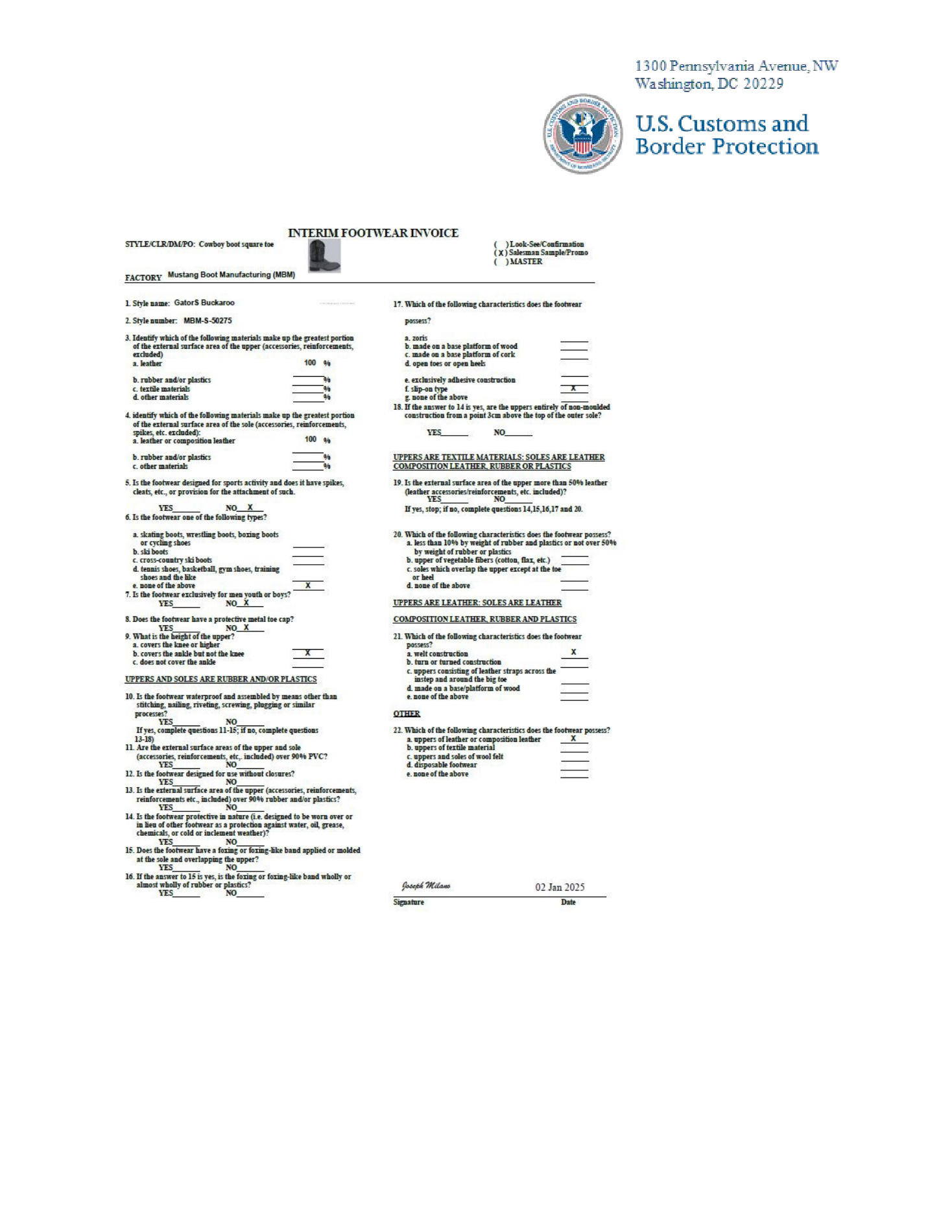
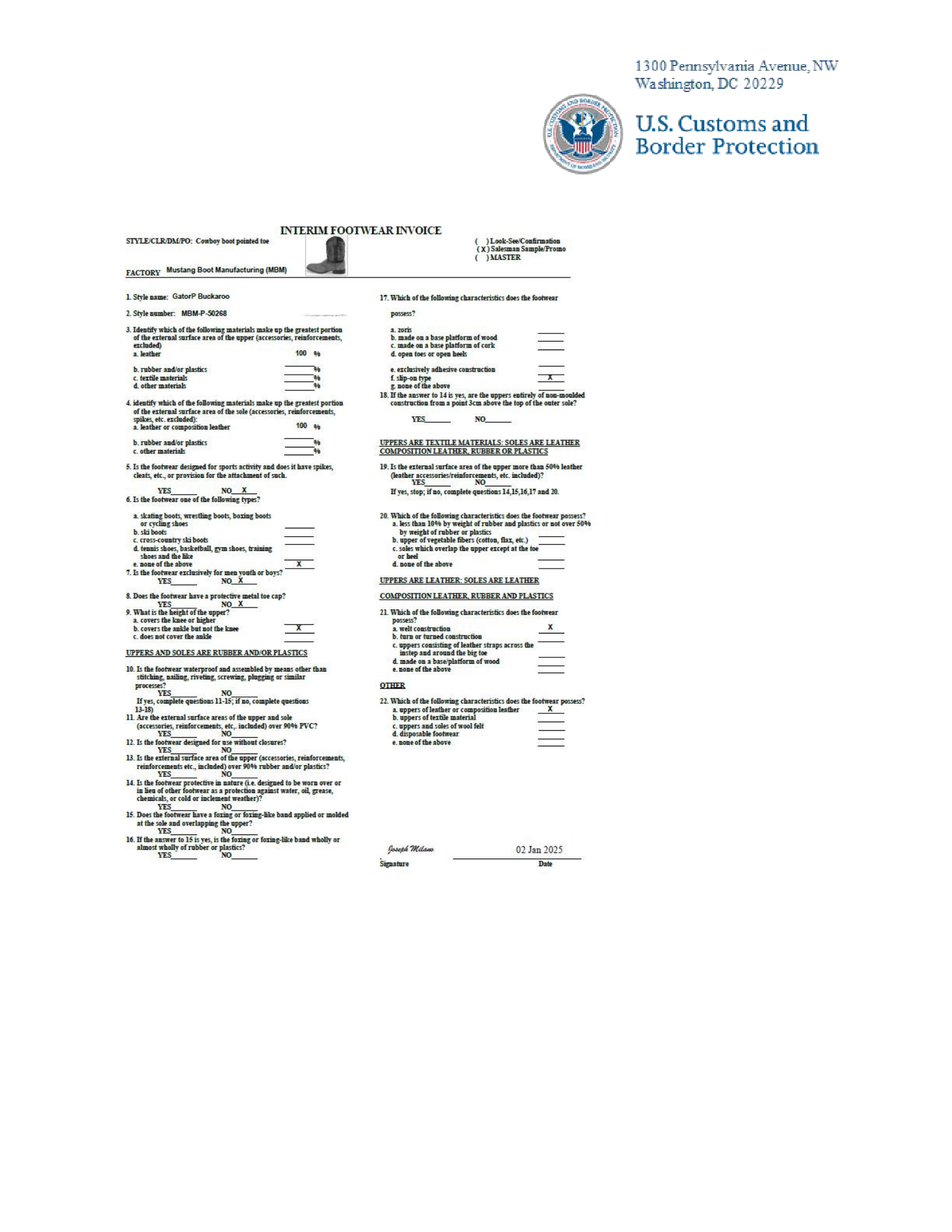
The Interim Footwear Invoices state that the boots are leather. What section notes, chapter notes, and/or subheadings in the Harmonized Tariff Schedule of the U.S. (HTSUS) provide for the American alligator skin cowboy boot upper?
How to get there
The invoices call the uppers “leather.” Chapter 64 has its own definition of what counts:
HTSUS Chapter 64, Note 3(b)For the purposes of this chapter: … (b) the term “leather” refers to the goods of headings 4107 and 4112 to 4114.
So the alligator-skin upper must be leather of one of those headings. Heading 4113 covers leather of other animals, and its subheading 4113.30 covers leather “of reptiles”. The American alligator is a reptile, so the upper is reptile leather of 4113.30, and the boots have uppers of leather for Chapter 64 purposes. The answer is C.
Why the other choices are wrong
A) Ch. 39 Note 2(p); 3920.43: plastic sheet and film. Alligator skin isn't plastic.
B) Ch. 41 Note 2(a); 4104.49: tanned or crust hides of bovine or equine animals. That fits the Italian cow-leather soles and heels, not the alligator upper.
D) Ch. 42 Note 1; 4203.40: leather clothing accessories of Chapter 42. Footwear and its uppers belong to Chapter 64, and Chapter 64 defines leather by reference to Chapter 41 headings.
Tip
Footwear “leather” = headings 4107, 4112, 4113, 4114. Reptile leather is 4113.30. The upper's material (greatest external surface area, Ch. 64 Note 4(a)) then drives the footwear heading, here 6403 (leather uppers).
Sources: HTSUS Chapter 64 Notes 3(b) and 4(a); subheading 4113.30 (USITC); exhibits pp. 8–10.
CBP answer key: Answer C · HTSUS Chapter 64, Note 3(b); HTSUS 4113.30Source: CBP past exams ↗