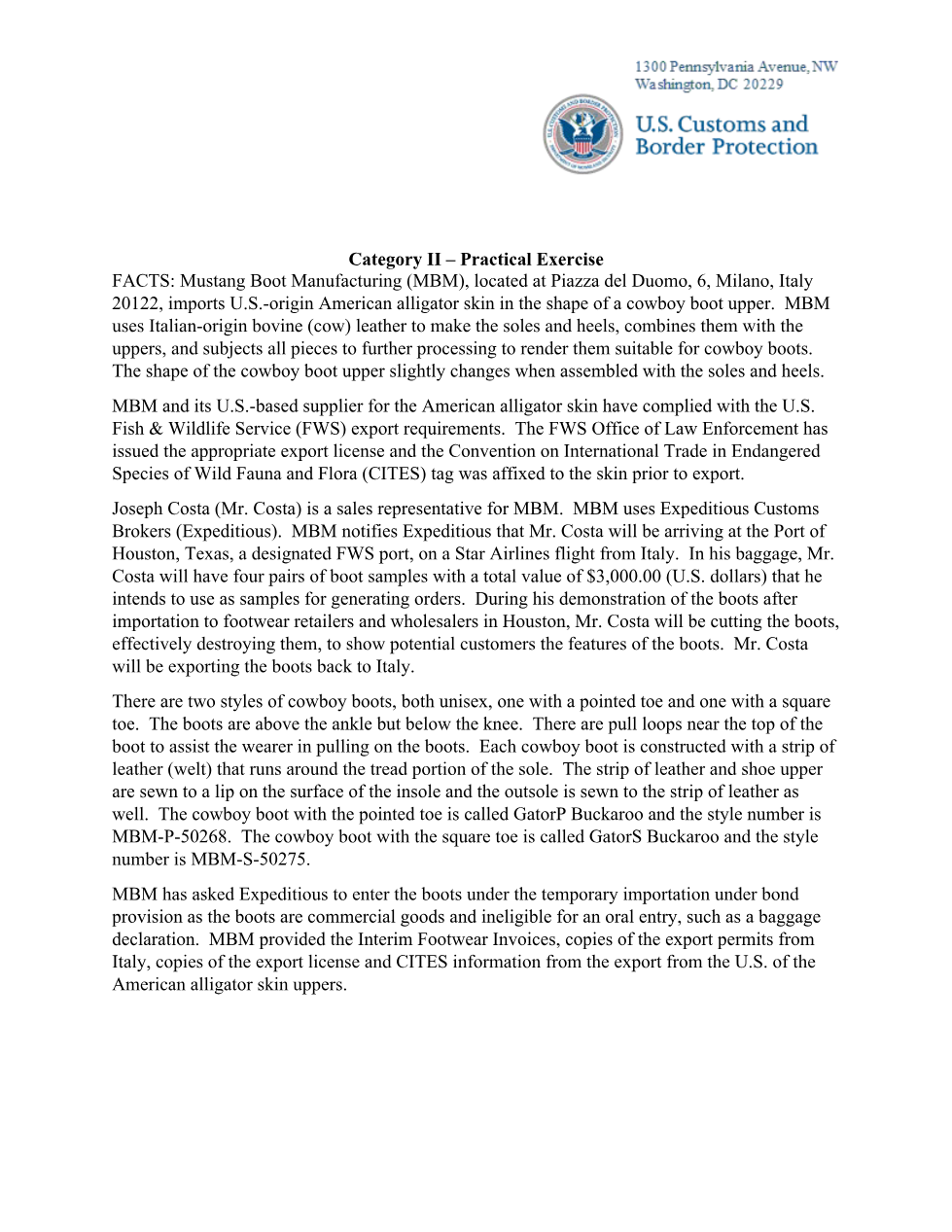
In accordance with the facts above, which of the following provisions of the CBP regulations are the most relevant for Expeditious to research whether U.S. Fish & Wildlife import permits are required for MBM's boots?
How to get there
The boot uppers are American alligator skin, a wildlife product covered by CITES. CBP enforces Fish & Wildlife Service requirements at the border, and its own regulations on this sit in the 12.26–12.32 block:
19 CFR 12.26 (heading and excerpt)Importations of wild animals, fish, amphibians, reptiles, mollusks, and crustaceans; prohibited and endangered and threatened species; designated ports of entry; permits required. … If any species … of other live or dead fish or wildlife, including any parts, products … appearing on the Endangered Species List … is imported, Customs release … shall be refused unless there has been issued and presented … a proper U.S. Fish and Wildlife Service permit …
Sections 12.27–12.32 continue the subject: illegally taken wildlife, wildlife taken in violation of foreign law, wild-bird plumage, whaling, plant pests and honeybees. This is where Expeditious should look, along with the FWS rules they reference. The facts also note Houston is a designated FWS port, a § 12.26 concept. The answer is B.
Why the other choices are wrong
A) 19 CFR 10.16–10.26: assembly abroad of U.S. components (the 9802.00.80 rules) and related provisions. They cover duty, not wildlife permits.
C) 19 CFR 111.19: broker national permits, unrelated to import admissibility.
D) 50 CFR Part 15: the Wild Bird Conservation Act rules for exotic birds. It isn't a CBP regulation, and alligators aren't birds.
TipAdmissibility homes in 19 CFR part 12: 12.26–12.32 wildlife, plant pests and honeybees; 12.33–12.34 tea; 12.73 vehicle emissions; 12.95–12.98 switchblades. Know the block for each agency.
Sources: 19 CFR 12.26–12.32 (eCFR); facts p. 8.